The Hebden Bridge Arts Scene: Galleries, Studios, and Street Art
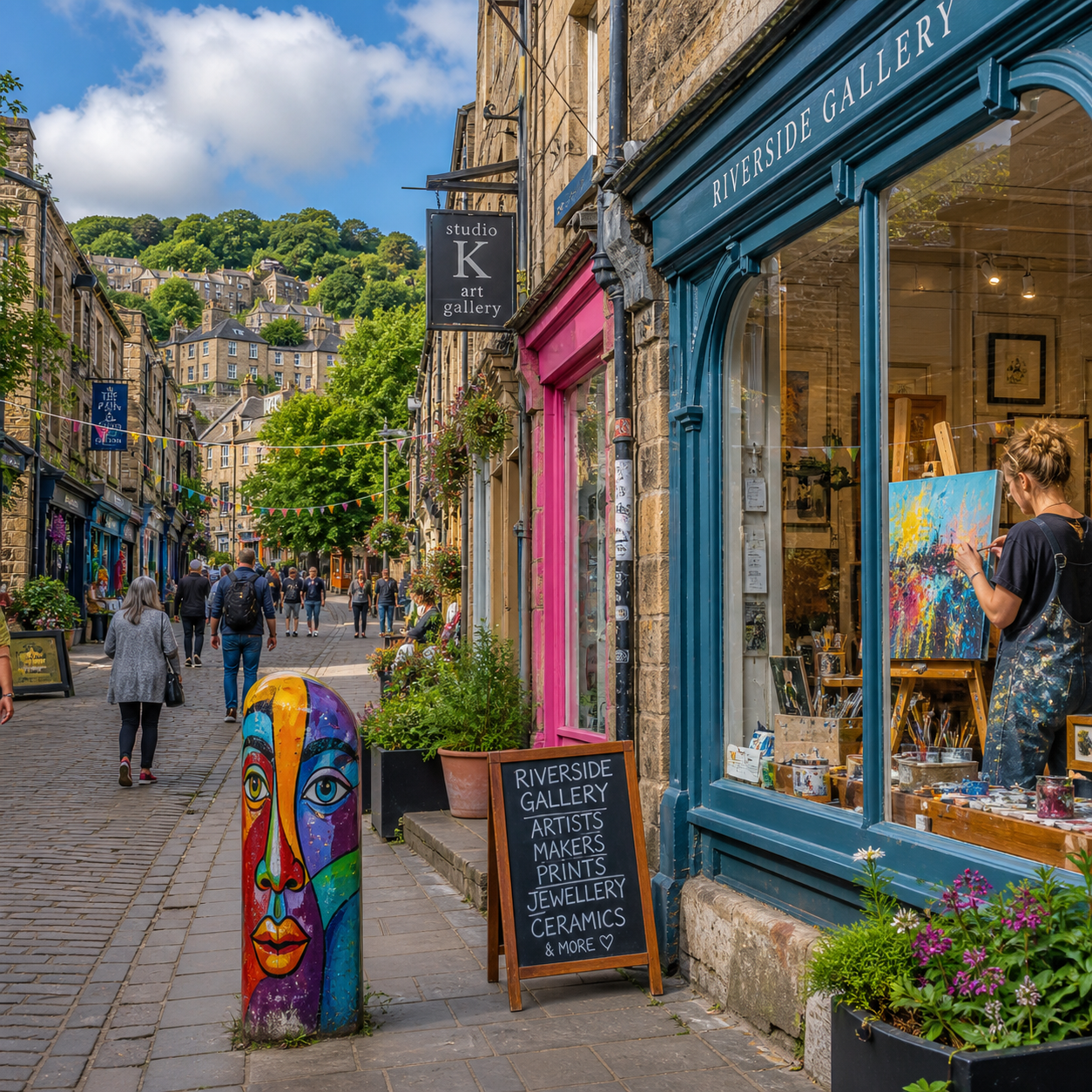
Hebden Bridge has an arts scene that is easy to encounter without following a formal trail. A gallery may sit beside a café, a printmaker may sell work from a small shop, and a painted wall can turn an ordinary walk through the Calder Valley town into an informal exhibition.
The character of the scene comes from its variety and its connection to everyday community life. Visitors can browse contemporary galleries, meet makers at open studios, find locally produced gifts, or follow public art around the streets. Opening times and exhibitions change, so checking current listings and local news before travelling remains essential.
Why Hebden Bridge Has a Strong Creative Identity
Hebden Bridge has a strong creative identity because independent businesses, local artists, community organisations, and visitors share a compact town environment. Its position in the Calder Valley supports a culture where art is visible in shops, studios, public spaces, and community events.
The town’s independent spirit is central to this identity. Small businesses often give more space to handmade goods, exhibitions, workshops, and unusual displays than a conventional high street would. That creates useful links between creative practice and local trade, although rising costs and changing retail conditions can make these spaces difficult to sustain.
There is also a difference between a town with occasional cultural events and a genuine creative community. In Hebden Bridge, artists, craftspeople, musicians, designers, photographers, and residents often overlap through markets, fundraisers, workshops, and shared venues. Art becomes part of local conversation rather than a separate attraction reserved for visitors.
For context, the town sits within Calderdale, the metropolitan borough that includes much of the Calder Valley. Local authority information and community listings can help visitors understand current facilities, access arrangements, and public events before arriving.
Galleries and Exhibition Spaces to Explore
Hebden Bridge galleries offer a mix of contemporary art, craft, photography, printmaking, and locally focused exhibitions. The most rewarding approach is to visit several smaller spaces rather than expect one large museum-style collection.
Exhibition spaces in the town vary considerably. Some present changing work by one artist or a small group; others combine paintings, ceramics, textiles, jewellery, cards, and prints for sale. This makes the gallery experience feel closer to browsing a curated independent shop, with the added opportunity to learn about the people who made the work.
What visitors may find
- Framed paintings and drawings inspired by the Calder Valley landscape.
- Limited-edition prints, posters, and artist-made books.
- Ceramics, glass, woodwork, and textile pieces suitable for gifts or home use.
- Photography documenting local buildings, waterways, hills, and community life.
- Rotating exhibitions connected to seasonal themes, local causes, or group showcases.
Before visiting, check whether a venue is operating as a gallery, shop, studio, or event space on that day. Some places have limited opening hours or close between exhibitions. Ask about accessibility, display changes, and whether purchases can be collected or posted. Buying directly from a gallery or independent art shop can provide clearer support for the artist than treating the work as anonymous retail stock.
Visitors looking for current openings should also check venue websites, social media pages, and reliable local listings. Exhibition dates can change, particularly when spaces depend on volunteer teams or shared premises.
Artist Studios and Independent Creative Spaces
Artist studios give visitors a closer view of how local artwork is made. Open studios, workshops, and maker-led spaces may reveal materials, tools, unfinished work, and the practical decisions hidden behind a finished gallery piece.
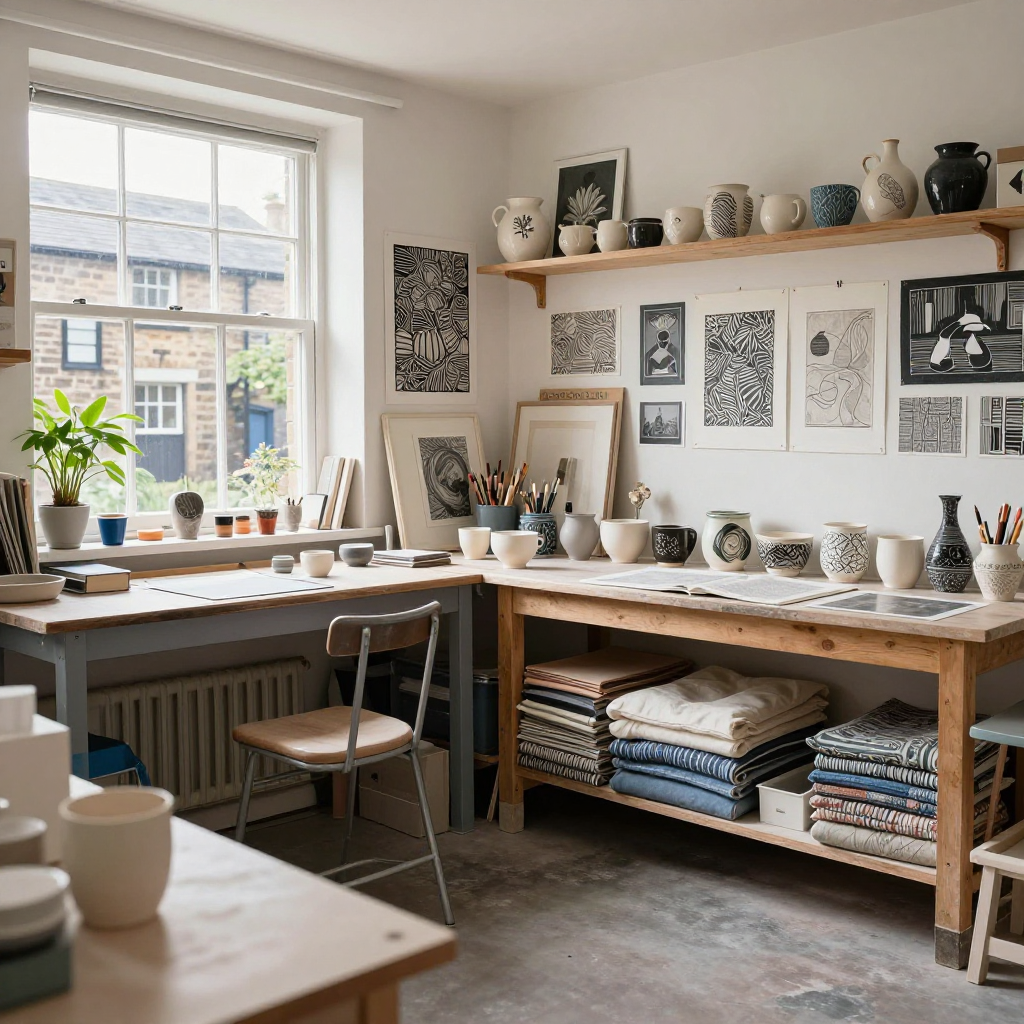
A studio visit feels different from a gallery visit. In a gallery, the work has been selected and arranged for viewing. In a studio, the process is more visible: a print may be drying, a pot may be waiting for firing, or fabric samples may show several attempts before the final design. That direct contact can make the creative economy of Hebden Bridge easier to understand.
Studios may be independent, shared by several practitioners, or linked to organised open-studio weekends. Not every workspace is permanently open to the public, and some artists work from private premises. Visitors should never assume that a closed door indicates a missed attraction. Look for advertised open days, appointment information, or public workshops.
How to make a studio visit useful
- Check the studio’s opening arrangements before setting out.
- Ask permission before photographing the workspace or unfinished pieces.
- Allow time for conversation, while respecting that the artist may be working.
- Ask how a piece was produced, where materials come from, and whether commissions are available.
- Bring a payment method suitable for small independent businesses if you plan to buy work.
Open studios can be especially valuable for residents. They create a low-pressure way to meet local artists, discover classes, and understand how creative spaces contribute to neighbourhood life. The trade-off is that studio events can be busy and less predictable than formal galleries, so advance planning helps.
Discovering Street Art Around Hebden Bridge
Street art in Hebden Bridge appears through murals, painted walls, installations, signs, and temporary public art. It is best understood as changing community expression rather than a fixed collection of attractions.
Look around pedestrian routes, bridge approaches, back streets, independent business frontages, and spaces near community facilities. Painted shutters, utility boxes, mosaic details, and small interventions can be as revealing as a large mural. Water, stone, narrow streets, and the surrounding hills provide a distinctive setting, but the work often speaks just as strongly about local identity, environmental concerns, inclusion, or neighbourhood memory.
Public art raises practical questions about ownership and permission. A wall may be privately owned, a mural may be temporary, and a piece may disappear during building work or repainting. Do not touch, climb, or add to artwork, and avoid blocking doorways while taking photographs. Respect residents and businesses, especially in quieter lanes.
A simple walking method works well: begin near the central shopping area, follow side streets at a slow pace, cross the river or canal where safe, and return through a different route. Keep the route flexible because street art is often discovered rather than formally signposted. Weather also matters; wet surfaces, steep paths, and uneven paving can affect access.
The Artists and Makers Behind the Scene
Local artists in Hebden Bridge work across painting, ceramics, textiles, printmaking, sculpture, photography, illustration, and mixed media. This range gives the town’s arts scene a broader identity than a single style or movement.
Landscape remains an obvious source of material, from the valley’s waterways and mills to its changing light and weather. Yet local practice also includes portraiture, abstraction, social commentary, reclaimed materials, decorative craft, digital work, and functional design. Independent art shops often bring these disciplines together, allowing visitors to compare a hand-pulled print with a woven piece or a small ceramic sculpture.
The distinction between artist and maker is also less rigid than it can appear elsewhere. A textile artist may sell practical household items; a ceramicist may produce one-off sculpture as well as tableware; a photographer may work on commissions alongside gallery prints. That mix reflects the realities of earning a living creatively.
When buying work, ask about the process and care requirements. A low-cost print, a handmade mug, and an original painting involve different levels of time, material, and maintenance. Clear information helps buyers make informed choices and gives artists a chance to explain the value of their work.
Arts Events, Openings, and Community Activity
Arts events in Hebden Bridge include exhibition openings, markets, workshops, festivals, talks, open studios, and community-led projects. These activities connect professional artists with residents and give visitors more active ways to participate.
An opening night may offer a chance to meet an artist and hear about a new body of work. A workshop can introduce printmaking, drawing, textiles, or ceramics to beginners. Markets bring together makers who do not have permanent retail space, while community exhibitions may focus on local history, wellbeing, environmental issues, or youth projects.
Events can also reveal tensions within a creative town. Popular weekends may increase footfall for independent businesses, but they can bring pressure on parking, public transport, accommodation, and local services. Community-led programming works best when residents are treated as participants rather than scenery.
- Check event dates, booking requirements, and age limits.
- Confirm whether workshops include materials or require participants to bring equipment.
- Ask about step-free access, seating, toilets, and quieter visiting periods.
- Use local news listings for cancellations, venue changes, and newly announced exhibitions.
Following local arts coverage is often more reliable than relying on an old visitor guide. Small exhibitions may receive little advance promotion, and a community event can be announced only weeks before it takes place.
Planning an Arts-Focused Visit to Hebden Bridge
To plan an arts-focused visit to Hebden Bridge, combine one or two galleries with independent shops, a studio or workshop, and a flexible street-art walk. Leave time for unexpected discoveries and verify every venue’s current details.
A practical route framework
- Start with current information. Check exhibition listings, opening times, access notes, weather, and transport before leaving.
- Choose a gallery cluster. Begin with a central exhibition space or independent art shop so you have a clear first destination.
- Explore the surrounding streets. Look for shop windows, public art, murals, and smaller displays without entering private areas.
- Add a process-based stop. Visit an advertised studio, workshop, or maker event if one is open.
- Finish with local conversation. Ask businesses or event organisers about current exhibitions and forthcoming arts events.
A half-day allows for several galleries and a short public-art walk. A full day gives more room for a workshop, a longer conversation with makers, or a return visit to a venue that was closed earlier. Wear suitable footwear if your route includes steep or uneven streets, and do not build a schedule so tight that one delayed opening ruins the day.
Three common planning mistakes are easy to avoid. First, assuming every gallery opens daily can lead to wasted travel; verify times directly. Second, treating street art as a guaranteed checklist can create frustration because public work changes. Third, overlooking accessibility can exclude people from studios or older buildings; ask practical questions in advance.
Hebden Bridge’s arts scene is strongest when viewed as a network rather than a list of attractions. Galleries provide presentation, studios reveal process, independent art shops support sales, and street art brings creativity into shared space. Together, they show how the creative community contributes to the everyday character of the Calder Valley.
Frequently Asked Questions
Where can visitors see art in Hebden Bridge?
Visitors can see art in galleries, independent art shops, exhibition rooms, artist studios, cafés, community venues, and public spaces. Current opening times and exhibitions should be checked before travelling.
Are there artist studios open to the public?
Some artist studios welcome visitors during advertised open-studio events, workshops, or by appointment. Many remain private workplaces, so look for specific public-opening information rather than arriving unannounced.
Can visitors buy work by Hebden Bridge artists?
Yes. Galleries, independent art shops, markets, open studios, and maker events may sell original paintings, prints, ceramics, textiles, sculpture, photography, and handmade gifts. Ask whether the artist sells directly and whether delivery is available.
Where can street art be found in the town?
Street art and public art may be found along central pedestrian routes, bridge approaches, side streets, business frontages, and community spaces. Locations change, so a slow walk and respectful observation are more useful than relying on a permanent checklist.
Are there regular arts events or exhibitions?
Hebden Bridge hosts changing exhibitions, openings, markets, workshops, festivals, and community projects. Dates and venues vary, making local news pages, venue listings, and organisers’ current announcements the best sources for details.